
Program
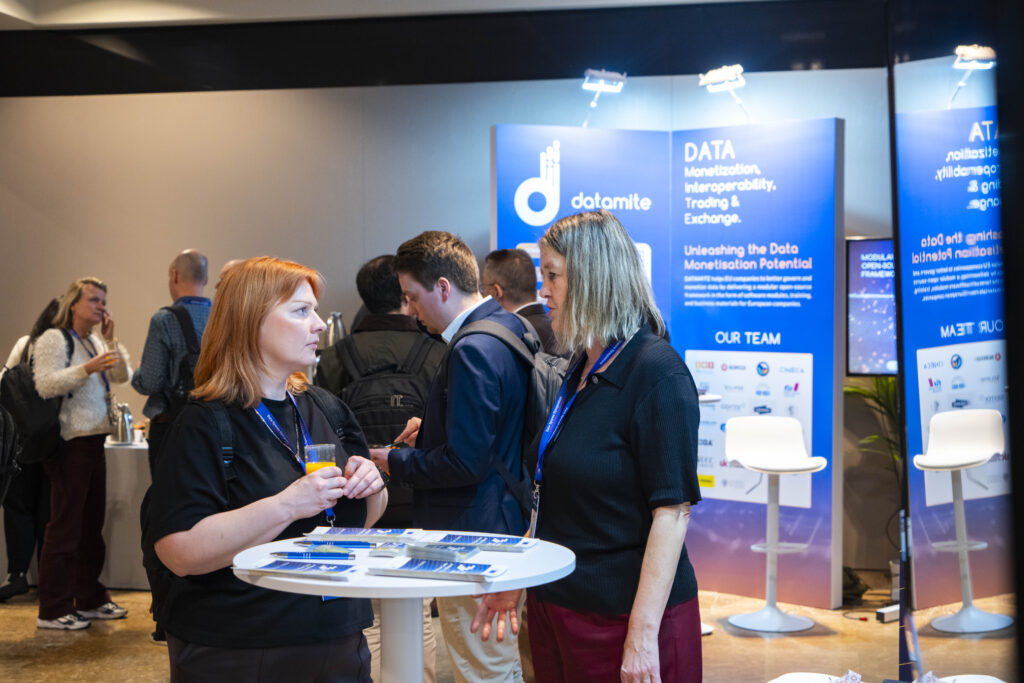
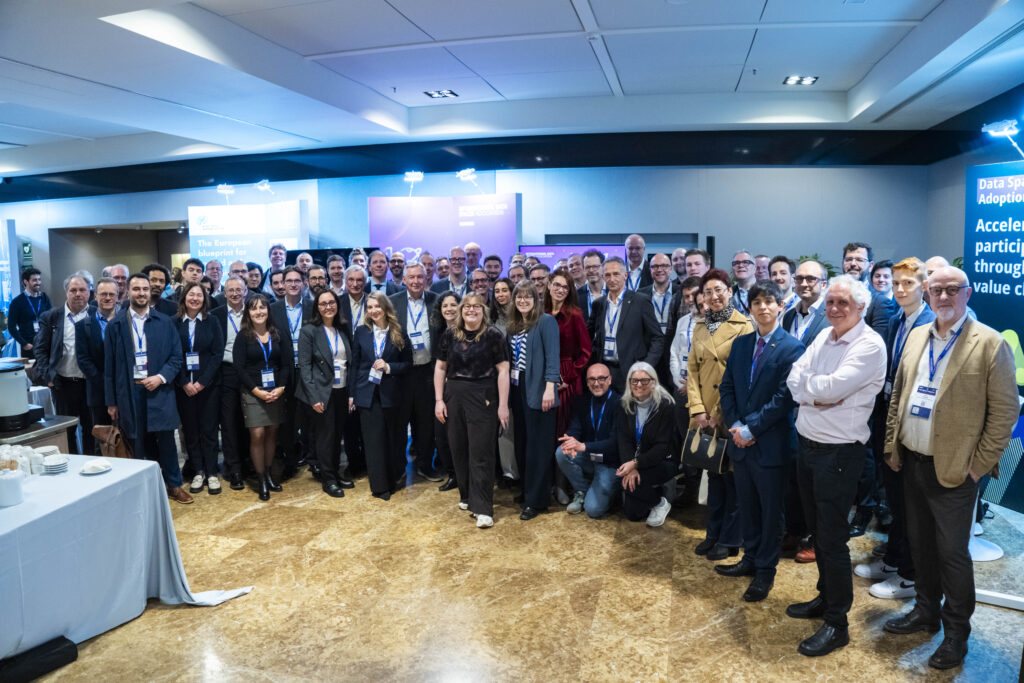
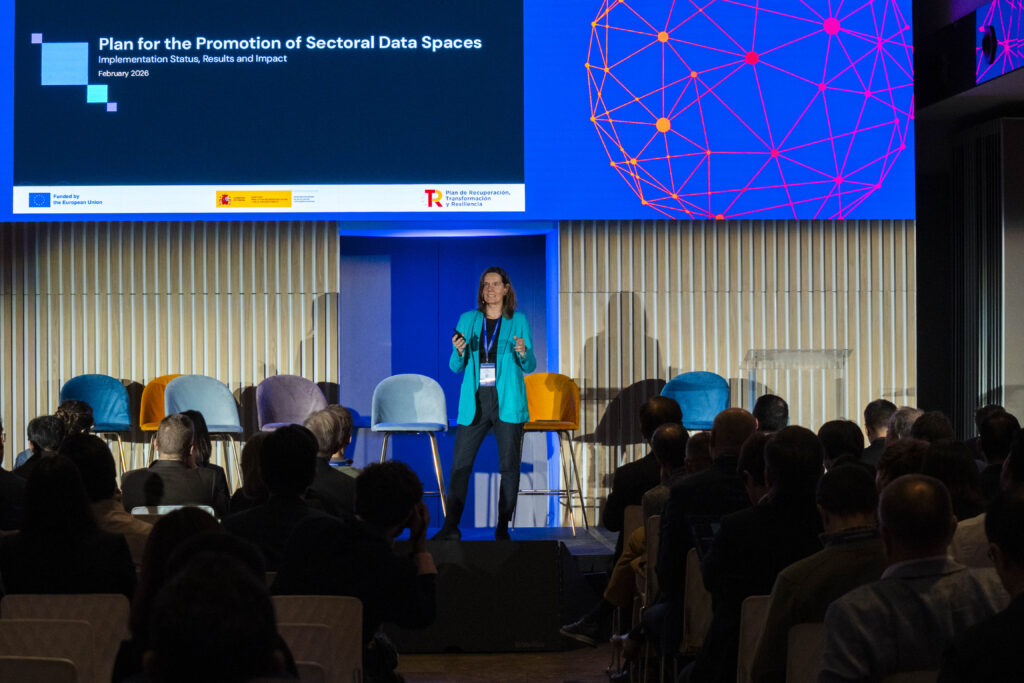
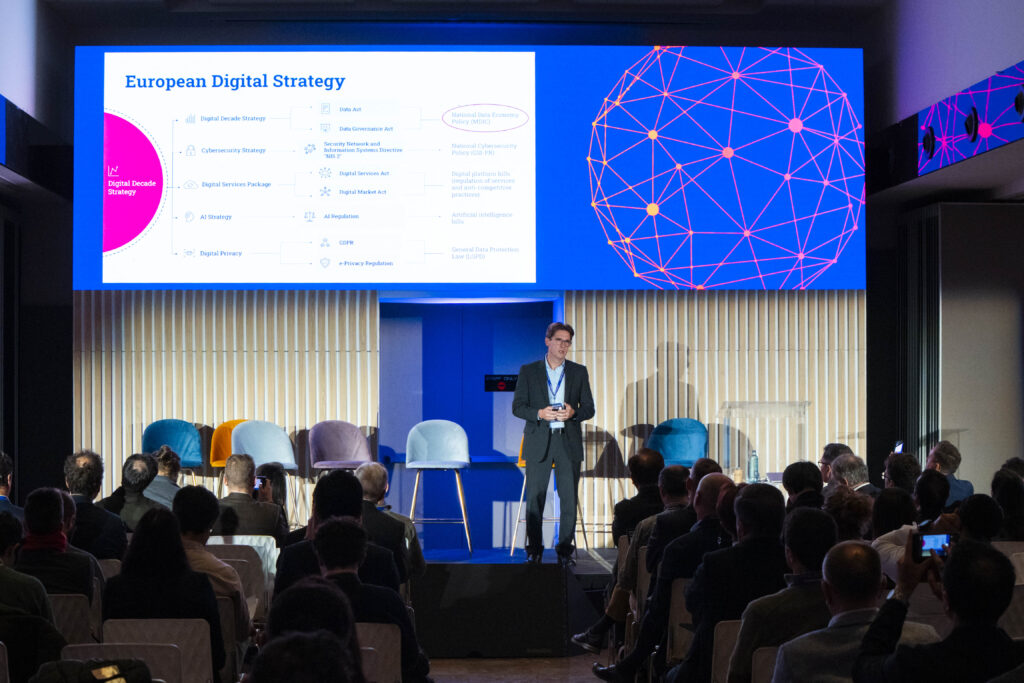
Memories of Data Spaces Symposium 2026








20:00
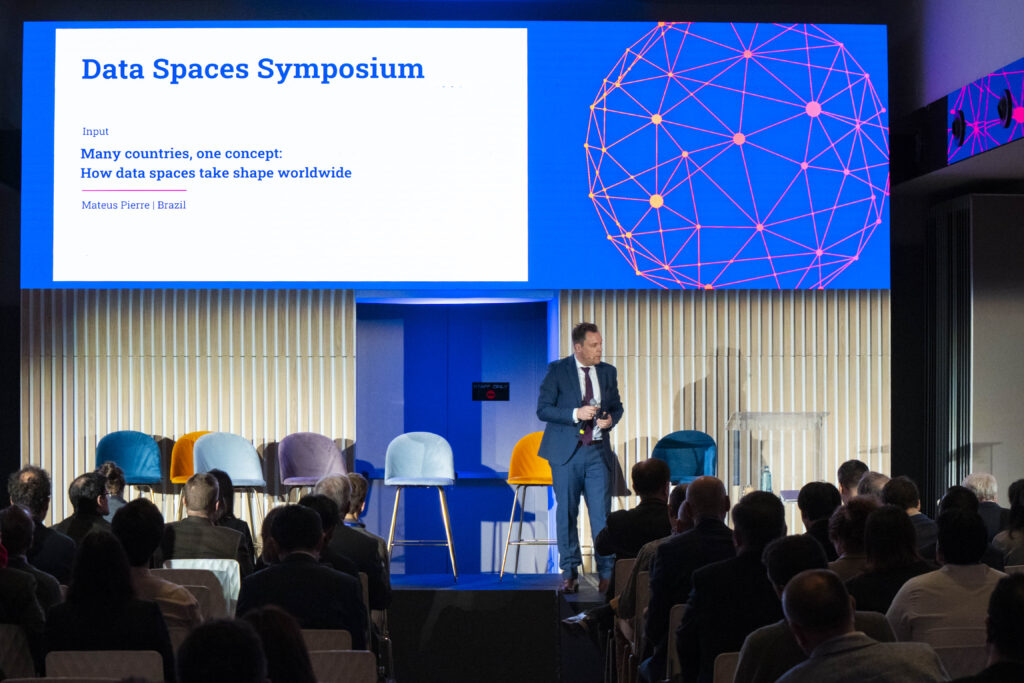
A night at the Prado: Pre‑Symposium Social Event at the Museo del Prado
Join us for an exclusive social event at the Museo del Prado in Madrid — reserved entirely for Data Spaces Symposium attendees, speakers, and coordinators.
- Meeting point: February 9, 2026 | 8 pm at the Museo del Prado, Retiro, 28014 Madrid, Spain
- Private visit: 20:30–22:00
- Limited capacity
- Free of charge, proudly sponsored by Libelium.
08:00
Registration
09:00
Intro plenary session
Building Europe’s data advantage
Room: Sala Convención
Europe is at a pivotal moment: secure, responsible, and scalable data use will shape its global competitiveness. This session brings together policymakers and industry leaders to explore how seamless data flows and connected data spaces can drive Europe’s next wave of innovation.
It outlines the Data Union strategy and Digital Omnibus package, designed to simplify rules and support an interoperable data ecosystem, moving on to the rapid growth of data spaces, data labs, and AI factories, supported by initiatives like the Cloud & AI Development Act and Simpl.
The session introduces the Data Spaces Symposium, showcases the work of the Data Spaces Support Centre and explores practical and sustainable solutions that meet real user needs as well as scalable models across Europe’s data ecosystem.
Welcome address

Keynote through video message | From Rules to Results: Driving Competitiveness in the AI Era


Intro Keynote | Advancing Industrial AI through data spaces: achievements and outlook

Intro speech| Shaping the Future of Data Spaces: The Data Spaces Support Centre Success Story
Panel discussion | The journey of data spaces: achievements, potentials, horizons
Moderation
Panelists





10:30
Break
Users track
11:00
From vision to value: data space success stories in manufacturing & supply chain
Room: Sala Convención
This session connects high-level policies, …
like the European Data Union Strategy, with real practical data space benefits for manufacturing and supply chains.
We address key industry’s global challenges such as sustainability (regulatory requirements like decarbonization), resilience (supply chain), and economic efficiency (based on AI/data-driven services) and present how data spaces deal effectively and efficiently with those by introducing concrete european and international success stories.
The core premise: no single company can solve these challenges alone. Success requires a shift from industrial data silos towards “interoperable, collaborative, sovereign, and autonomous” business ecosystems. This session shows how data spaces provide the technical, legal, governance and business framework for realising renewed data value chains.
Opening | The DSSC perspective


The State of Industrial Data Spaces: Global Insights and European Leadership









Industrial Data Spaces in Practice: Overcoming Challenges and Driving Scale
4 discussions on making industrial data work for resilient, interoperable ecosystems
Navigating VUCA: Interoperability and Resilience in Industrial Data Spaces


Decarbonizing Industry with Data: Driving Efficiency Across Borders and Sectors





Industrial-Grade AI: Unlocking Quality Data Flows for Manufacturing at Scale


Simplifying Compliance: Overcoming Regulatory and Technical Complexity for Scalable Data Spaces


Closing
Providers track
11:00
Business models & financial viability in data spaces
Room: Oslo-Madrid
In this session we look into …
the provider perspective of data spaces: We will discuss how making a business through the data spaces and their financial viability could look like.
Chair | Moderation


Keynote | Data Spaces at a Crossroads: The Quest for Sustainable Business Models. On Public Funding, Market Viability, and the Role of Public Policy


Financial Sustainability of Data Spaces: a Quantitative perspective

Conditions shaping data-sharing ecosystems development


Data Space Business Value: Case Studies

Lessons from Business models of common European Data Spaces

Best practices to create business through a data space; the Data Space perspective

From Data Sharing to Business Impact

Panel discussion | Business models & financial viability for data spaces
Innovators track
11:00
Data spaces as key enablers for AI
Room: Bahía-LaPaz
AI relies on access to vast amounts of …
high-quality data, but ensuring this access in a secure, trustworthy, and interoperable way remains a major challenge.
This session will review the essential role of data spaces to support the successful development and deployment of AI applications. We will discuss how data spaces can provide the required access to high-quality data that large AI models require as well as how they can evolve in a symbiotic relationship with AI technologies, enabling mutual benefits and successfully paving the way to trustworthy AI in Europe.
Based on this premise, and with a strong focus on the view from industry, the session is structured around three pillars:
- How ultimately data spaces would provide a global fabric to enable autonomous AI Agents
- How data spaces contribute to prepare data specifically for AI (AI-ready data)
- How data spaces provide technical and business value to AI
The session will bring together experts from data and AI community, industry representatives deploying AI applications with the need of vast amount of high quality data in different domains, and AI driven use cases from European data spaces
Chair | Moderation

Preparing data for AI within data spaces


Data spaces’ value for AI through AI-driven services and use cases (skills domain / SME perspective)


AI in the media domain for fact-checking and news content


Health data spaces to enable AI development, testing and validation


Data spaces and AI Sovereign solutions


Data spaces and AI driven applications for Energy grid and Smart mobility


Towards the future: Data spaces as global fabric to enable autonomous AI Agents


Wrap up and conclusions
12:30
Lunch
Users track
14:00
How data spaces drive compliance automation & help reduce administrative burden
Room: Sala Convención
Today, companies spend significant …
time and money on compliance. Even data already in digital form must often be reformatted and resubmitted to multiple authorities, where it is checked manually.
Data spaces enable participants to share data on a “need” basis, while preserving their autonomy. In this way, data spaces establish a trusted environment which can also be used to streamline the exchange of data with authorities. In this session we will explore some of the use cases.
An introductory chat



Compliance by design: A European banking scenario


Data space for the flexible staffing industry: how compliance became a business case

From factory to road: seamless battery data flow in data spaces



Towards a European Mobility Data Space: Interoperability, Governance, and Compliance


Legal requirements for Digital Product Passports: an SME perspective

Closing
Providers track
14:00
Solutions and tools you need to operate a data space
Room: Oslo-Madrid
Data space solutions are maturing.
Ranging from business offerings to open source compontents and including technical components like connectors and business & organisational support tools such as frameworks, rulebooks and templates. The DSSC Toolbox contains all these solutions. In this session we’ll announce the Toolbox v3 and several providers will pitch their solutions.
Announcement | Introducing DSSC Toolbox v3: Your Gateway to Data Space Operations


Eclipse Dataspace Components Framework Essentials for Data Spaces


Scaling Data Ecosystems with Multi-Tenant EDC


Simpl programme, Testimonial and latest news
Simplifying Data Spaces: Inside the Simpl Open Component Suite



Stop Debating. Start Operating. Unlock the Power of Dataspaces with Dataspace Lab by Cofinity-X.


Building Trust at Scale: The iShare Authorisation Registry Explained

Innovators track
14:00
Data labs and AI Factories
Room: Bahía-LaPaz
As announced in the AI Continent Action Plan and …
the Data Union Strategy, data labs will be established, providing secure environments and data services to connect AI factories with common European data spaces. The session will provide an update on the latest developments.
Keynote: Data Labs in the Data Union Strategy

Three panel discussions | Data Labs: bridging data spaces and AI Ecosystems. The evolution in 3 verticals: manufacturing, language & culture, the public sector
Moderation

Panelists










Breakout session
14:00
From Insights to Action: Co-Creating the Future of Data Space Education
Room: London 1
Hands-on workshop gathering …
participant feedback to shape the next phase of the Data Space Professional Qualification Programme.
This session is co-organised by BAIDATA and IDSA. The DSS Programme Committee is not involved in its organisation. It enriches the programme and is open to all symposium attendees.
Intro | Moderation


15:30
Break
16:00
Plenary session
Data spaces everywhere – enabling economic collaboration
Room: Sala Convención
Data spaces are gaining momentum worldwide. They enable trusted data sharing across company, sector, and country borders — while preserving control over data and, above all, delivering real economic and societal value.
Yet the way data space technologies are applied differs significantly, and governance models and implementation practices vary from one context to another. This session showcases business-driven examples from around the world and explores how data spaces are put into practice. The aim is to understand what works, what scales, and how data spaces can connect economies and foster truly global collaboration.
Intro | Setting the scene

How the Berlin Declaration can push data spaces as indispensible element of digital ecosystems and AI


Data Spaces take off in Colombia: from trust to action


Data ecosystems in Korea
(data smart contracts and data identification systems, and subscription-based data distribution systems and billing)


Panel discussion | Many countries, one concept: how data spaces take shape worldwide



The power of Europe for trusted data sharing


Closing and summarising the day

18:45
Awards gala
European Data Spaces Awards | Evening Gala | Dinner
Location: Círculo de Bellas Artes, Madrid
The European Data Spaces Awards Ceremony celebrates outstanding European initiatives that drive innovation, trust, and value creation through data sharing. The awards highlight best-in-class data space implementations, showcasing successful governance models, real-world impact, and cross-sector collaboration that foster the growth of the European data economy.
The ceremony will be embedded in the evening gala, which be followed be the dinner. This offers a unique opportunity to connect with pioneers, practitioners, and policymakers shaping the data-driven future.
Celebrating excellence in data spaces. The European Data Spaces Awards will spotlight the achievements of six outstanding finalists. Policymakers will hand over awards in two categories:
- Excellence in end-user engagement and financial impact
- Most innovative emerging data space
The ceremony concludes with a photo session honoring the winners and their contributions to the data economy.
Further information about the European Data Spaces Awards — including details on the nominees, the jury, and the evaluation criteria — can be found on the Data Spaces Support Centre website.
- Location: Círculo de Bellas Artes, Alcalá 42, 28014 Madrid
- Doors open: 18:45
Please note that an additional free ticket is required to attend the award ceremony and evening gala.
Welcome message to an inspiring evening dedicated to excellence in European data sharing | awards ceremony
08:00
Registration
09:00
Plenary session
Data spaces at work – global industry perspectives
Room: Sala Convención
Companies and industries are already using data spaces, recognizing their potential and generating new insights into data-driven collaboration.
These insights raise important questions: Where should more data spaces be developed? How can small and medium-sized enterprises be included and benefit from them? And if data spaces deliver economic value: How can investors be motivated to engage? Each answer points to a different path forward — how adoption can accelerate, how impact can scale, and how the role of data spaces in the economy can grow.
Grand opening of day 2

The Spanish strategy on data spaces


Keynote | Gartner’s hype cycle for manufacturing


Panel discussion | Data spaces at work – global industry perspectives
Moderation
Panelists





Breakout session
Building an agricultural data space that endures
Room: Caracas
During this session, organized by Agmadata, supported by ILVO, …
lessons learned and challenges from different data sharing initiatives (focused on agri food) in the EU will be discussed. The idea is to have an open discussion with other participants of the Data Space Symposium. This session is a follow up from the interesting discussion that happened in the last edition of the Data Space Symposium in Warsaw.
This session is organised by Agmadata. The DSS Programme Committee is not involved in its organisation. It enriches the programme and is open to all symposium attendees.
Moderation

Presentations




10:30
Break
Users track
11:00
Addressing real needs, creating added value: empowering municipalities and regions through data spaces
Room: Sala Convención
Data spaces are emerging across …
Europe — in countries, regions, and even small municipalities — addressing real needs and creating tangible value. They draw on diverse business and financial models and are already delivering solutions in sectors such as tourism, health, smart cities, and agriculture.
To fully unlock their potential, data spaces must overcome practical challenges and achieve interoperability. This session presents successful examples at different territorial and sectoral levels and offers insights into how data spaces can be implemented in a way that is scalable, impactful, and beneficial to all stakeholders
From Challenge to Solution: European Cooperation Driving an Interoperable Common Tourism Data Space


Building a national Data Space: One Government Infrastructure, Many applications


From European Seed Funding to Autonomous Progress

Empowering Data Spaces: How Official Standards and Guidelines Support Your Projects


Panel discussion | Challenges, achievements and next milestones to fully unlock the value of high-quality media, cultural, and linguistic datasets
Moderation

Panelists









Providers track
11:00
Legal enablers for data sharing: state of play and path forward
Room: Oslo-Madrid
The EU has introduced …
an ambitious and innovative legal framework aimed at unlocking the value of data through high-value datasets, data intermediaries, Model Contractual Terms, new provisions in the Data Act, and sector-specific initiatives.
With the focus now on simplification, coherence, and practical implementation, key questions arise: What is the current state of play? How are these legal enablers supporting the development of Common European data spaces? Which implementation steps have been taken? And how can the legal framework and its implementation continue to evolve to further facilitate trusted, secure, and interoperable data sharing?
Legal enablers for data sharing – From the European Data Strategy to the Data Union
Enabling data transactions: High-Value Datasets and Model Contractual Terms in the Data Act


Legal enablers for data spaces – a netional perspective


eIDAS2, Data Intermediaries in the Data Governance Act and data access and portability rights

Panel discussion | Legal enablers for data sharing
Panelists


Innovators track
11:00
Financing the future: from public funding to private investment in Europe’s data spaces
Room: Bahía-LaPaz
Europe’s data spaces are entering a critical …
transition as public funding gives way to stronger private-sector involvement. This session explores how sustainable business models, investment dynamics, and market readiness can accelerate the data economy.
Through expert debate, startup pitches, and a collective reflection, we examine what it takes to create scalable, investable, and interoperable data-space ecosystems that support Europe’s digital ambitions.
Intro keynote | Beyond Public Funding: Unlocking Investments in Data Spaces
Panel discussion | Beyond public funding: unlocking investments in data spaces
Moderation
Panelists



Startup pitches



Breakout session
11:00
Who onboards the millions? Solving data spaces at scale
Room: Caracas
Discover how the Data Space Adoption Forum …
is driving a major shift — making trusted data sharing practical and valuable through cloud-based solutions and collaborative models that replace complexity with speed, scalability, and real-world adoption.
The Data Space Adoption Forum (DSAF) champions practical, market‑ready services that help data space initiatives achieve real adoption.
Backed by IDSA, Gaia‑X, CISPE, and leading industry and cloud players, DSAF brings together business and technical expertise to accelerate trusted data sharing through concrete deployments and use cases.
This session is organised by the DSAF. The DSS Programme Committee is not involved in its organisation. It enriches the programme and is open to all symposium attendees.
Introduction
Presentations




Panel discussion | Who onboards the millions – the business perspective
Moderation


Panelists


12:30
Lunch
Users track
14:00
How data spaces help to unlock cultural, media and linguistic resources
Room: Sala Convención
Europe is unlocking new …
competitive advantages in AI by opening access to high-quality media, cultural, and linguistic datasets.
than 30 million digitised works from Europe’s cultural institutions will be made available for AI development, and new cooperation with public broadcasters will create opportunities for AI-driven archive restoration, content enrichment, and advanced multilingual media services. The development of the European common language data space and ALT-EDIC further accelerates progress. By crowdsourcing domain-specific datasets, including rare and smaller languages, Europe positions itself to build large language models that reflect its full linguistic diversity. The session will show how these data resources can create a thriving ecosystem where media organisations, cultural institutions, researchers, and SMEs collaborate to build world-leading, trustworthy AI.
Introduction and context
The Common European Language Data Space in 2026 and beyond
TEMS: trusted media data sharing as a catalyst for new added value

Panel discussion | Challenges, achievements and next milestones to fully unlock the value of high-quality media, cultural, and linguistic datasets
Moderation
Panelists



15:00
From insight to impact: incentives driving SME participation in data spaces
Room: Sala Convención
Data Spaces offer key …
business opportunities for SMEs, but their adoption and scaling also presents some challenges.
The session will explore and showcase statements and experiences from various companies about data sharing in order to illustrate concrete approaches to solutions.
Why Data Spaces: the DSSC perspective
From Digital Product Passports to Data Spaces: How SMEs Turn Compliance into Business Opportunity
Data spaces in the meat production chain: a key tool for its sustainability


Panel discussion | Enhancing data sharing with data space: how so? Challenges and opportunities for SMEs
Moderation

Panelists


Providers track
14:00
Interoperability & standards – the key factor for scaling data spaces
Room: Oslo-Madrid
This session will gather …
European and international stakeholders to discuss how standardisation efforts drive global interoperability and large-scale adoption of data spaces, and identify gaps in standards development.
The session will provide an update of the standards being developed by CEN/CENELEC and ETSI for compliance with the EU Data Act. In addition through collaboration with global partners, such as ISO/IEC and W3C, it will showcase how a harmonized, trusted, interconnected and scalable data spaces ecosystem is being built.
During the session we will provide examples to illustrate how standards help to enable implementation, support scalability, and meet regulatory compliance.
Keynote | Data Union Strategy to accelerate work on interoperability

State-of-play of standards and protocols for global interoperability

Standards panel | From mandate to market in 30 minutes: Standardizing the European Trusted Data Framework (M/614) with a look ahead to the Digital Omnibus








Overview of DSSC Blueprint 3.0 and the interoperability stack

X-Road 8 “Spaceship”: A Journey to Data Spaces with the Dataspace Protocol (DSP)


Sovereign B2G Data Spaces: Secure and Interoperable Urban Infrastructure Data Sharing with Eclipse Components


Mondragon X: An Interoperable Industrial Data Space powered by Open Standards


Secure, multiregional data exchange across the automotive value chain


Innovators track
14:00
Europe’s Defence Data Space: An enabler for Military Innovation and Strategic Autonomy
Room: Bahía-LaPaz
The session will highlight data spaces …
as trusted environments for pooling operational, industrial, and research data to develop next-generation defence and cybersecurity systems and in support of strategic autonomy.
Chair | moderation
Gaining experience from the development of data ecosystems and from the deployment of innovative technologies for the Defense Sector.
Defence Data Spaces for AI Applications: Benefits, challenges and way ahead


Data sovereignty as a strategic enabler for Europe’s defence


Presentation by Airbus
15:00
Scientific data: Key enabler for innovation
Room: Bahía-LaPaz
This session will highlight use cases that illustrate how the sharing of scientific data helps to reduce research and development costs, accelerate innovation, and open up new frontiers in materials, pharmaceuticals, energy, and biotech.
Chair | moderation
Policy overview – perspective from the Data Union Strategy
Scientific data for European AI in science

Accelerating Industrial AI


Presentation by the Institute for Deep Tech Innovation


A digital-sovereign health data space for research and AI


Panel discussion | How to better share scientific data for fundamental research and innovation?
Breakout session
14:00
Deploying Interoperable Data Spaces with the FW Data Space Connector
Room: Caracas
This technical workshop…
brings details on latest release of FW Data Space Components (FDC) and the new FW Data Space Connector (DSC) which integrates EDC and FDC to power interoperable data spaces enabling not only B2B data exchange but consumption of data processing services and applications involving users as direct consumers.
This session is organised by SEAMWARE. The DSS Programme Committee is not involved in its organisation. It enriches the programme and is open to all symposium attendees.
Intro | Moderation | Workshop



Embarking on Compliance journey: Data Spaces as a Technical Backbone for Responsible AI
Room: Paris 2
This session moves from principles ….
to practice, showing how compliance can be built directly into data sharing and AI workflows. It explores how data spaces are evolving into compliant-by-design infrastructures that enable responsible AI while reducing administrative burden and increasing trust, transparency, and legal certainty across sectors.
Drawing on concrete technical approaches from European data space initiatives, the session highlights automated, machine-readable compliance and introduces the Gaia-X Danube architecture as an open framework for operationalising these concepts. A complementary international perspective will showcase developments around standardised data usage rights, automated data transfer agreements, and platforms supporting cross-border experimentation.
Together, the contributions show how compliance-by-design is becoming a practical enabler for scalable, trustworthy, and interoperable data spaces.
This session is organised by Accomplish, DataPACT and SAGE. The DSS Programme Committee is not involved in its organisation. It enriches the programme and is open to all symposium attendees.
Accomplish, DataPACT and SAGE receive funding from the EU’s Horizon Europe research and innovation programme under grant agreements 101189763, 101189771 and 101195471.
Setting the scene: Automated Compliance and Legal Enablers

Compliance Journeys in the Green Deal Data Space
Automated Compliance using Gaia-X Danube

Compliance in data transactions through third-party notarization


16:00
Break
16:10
Closing plenary session
From insight to action: the road ahead for data spaces
Room: Sala Convención
Insights of the past two days, translated into a forward-looking roadmap for data spaces.
Building on real-world impact, national strategies, and the need for global harmonization, we outline how data spaces can grow into a powerful, connected ecosystem that benefits economies and societies alike.
Keynote | Wrap-Up and Intro to the last session
Pitch | 8ra: Pave the way for Data Spaces with seamless Cloud-Edge Infrastructures – The Role of FACIS


Pitch | Model Provider: NX AI
Pitch | Solution Provider: Synera.io


Keynote | Venturing together – how the data space community can build (ad)ventures, not just standards


Keynote | DSSC Wrap-Up of the Success and Impact of our project
17:30
End of the Symposium